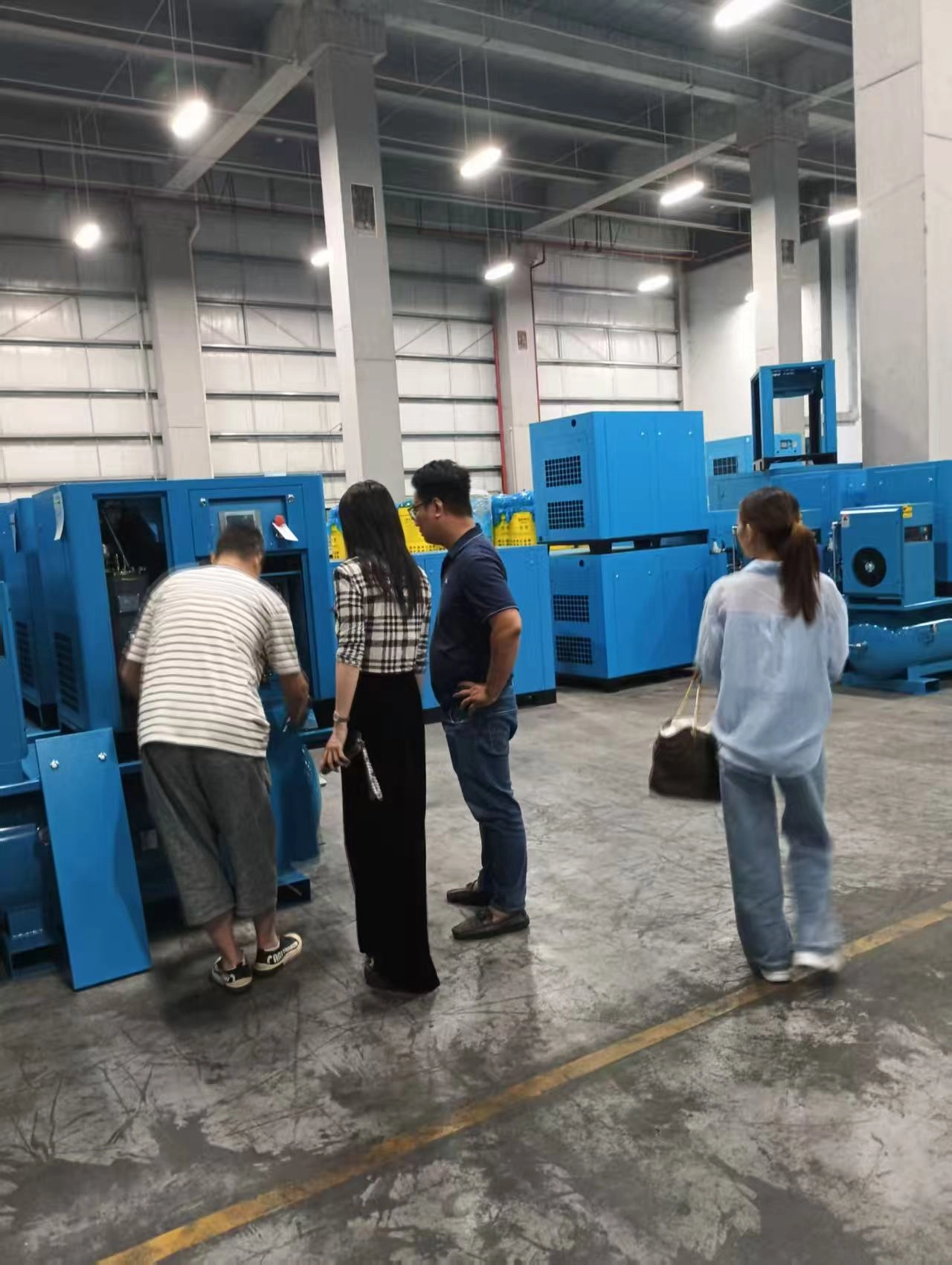
Refrigeration and Cooling Cycle
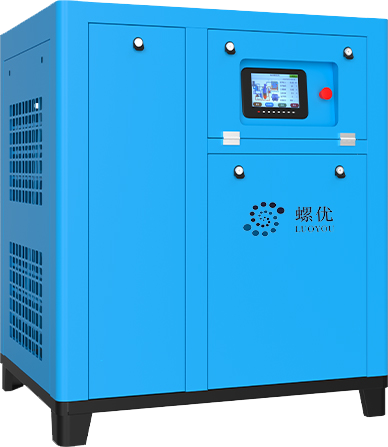
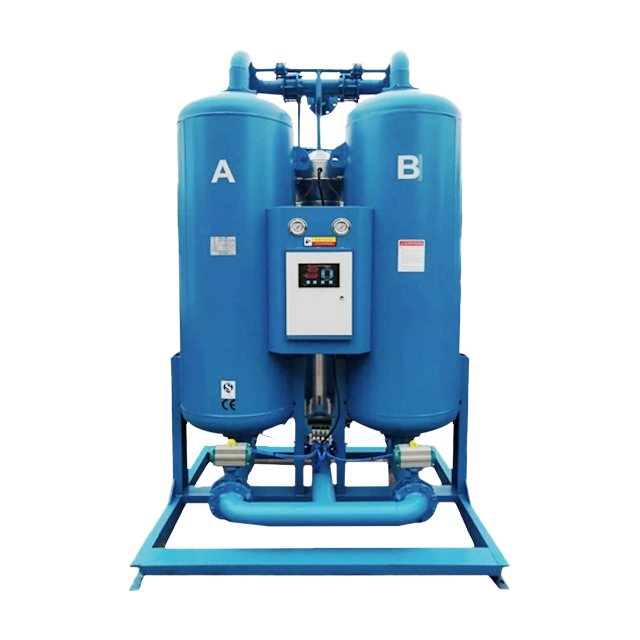
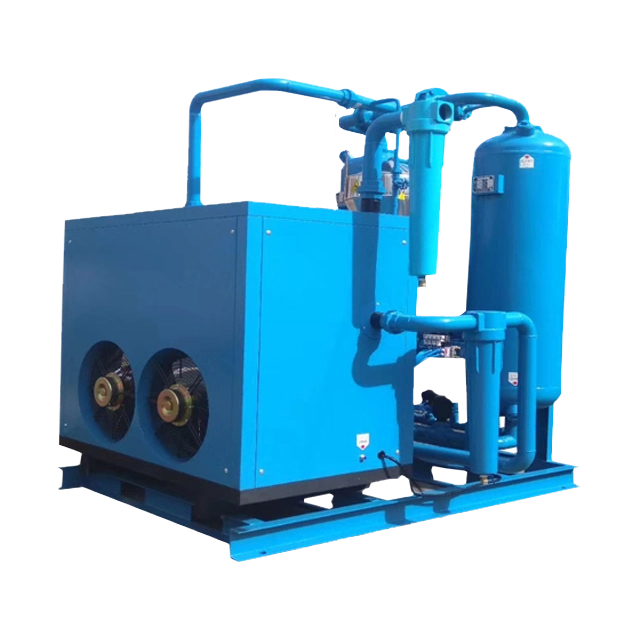
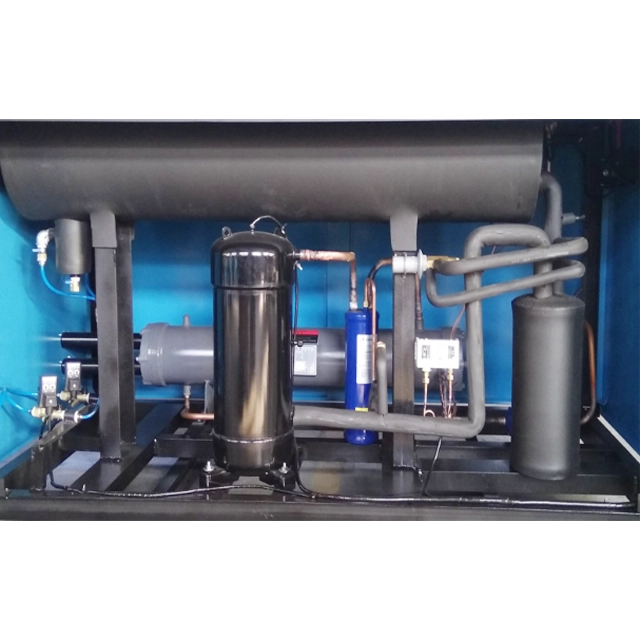
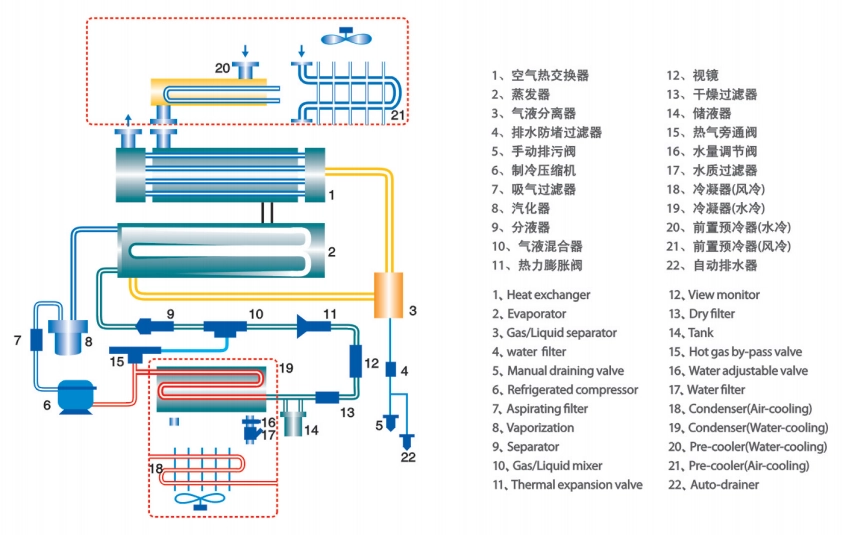
The core working principle of the Normal Temperature Water-Cooled Freezing Dryer revolves around a closed refrigeration cycle. Industrial circulating water flows through the condenser, absorbing heat from the refrigeration system to cool the refrigerant. The cooled refrigerant then circulates to the evaporator, where it lowers the temperature of incoming compressed air. As the compressed air cools, water vapor condenses into liquid droplets, which are separated from the air stream.
Air Treatment Process
Compressed air first enters the pre-cooler for initial cooling, reducing its temperature and removing a portion of moisture. It then flows into the air-to-air heat exchanger (recuperator), where it is further cooled by the dry, treated air exiting the system. Next, the air enters the evaporator, where the refrigeration system chills it to the dew point temperature. Condensed water is separated using a high-efficiency gas-liquid separator and discharged via an automatic drain valve. Finally, the dry air is reheated in the recuperator, raising its temperature to prevent condensation in downstream pipelines, and is then delivered for use.
Stable Dew Point Output
One of the key advantages of this dryer is its ability to maintain a stable dew point even in extreme temperature conditions. The water-cooled design minimizes the impact of ambient temperature changes, ensuring consistent dry air quality for critical processes such as electronics assembly and precision manufacturing.
High Heat Exchange Efficiency
The counter-flow heat exchanger design enhances heat transfer, allowing the dryer to process large volumes of compressed air efficiently. This not only improves drying performance but also reduces energy consumption, lowering operational costs over time.
Durable and Reliable Components
The Normal Temperature Water-Cooled Freezing Dryer uses imported core components, including fully enclosed refrigeration compressors from reputable brands and advanced refrigeration control parts. These high-quality components ensure stable operation, low noise, and a long service life, reducing maintenance frequency and costs.
Fast and Efficient Gas-Liquid Separation
The three-stage gas-liquid separation system ensures rapid and thorough removal of condensed water, preventing moisture from re-entering the air stream. This feature is critical for applications where even trace moisture can compromise product quality or equipment performance.
Easy Maintenance and Operation
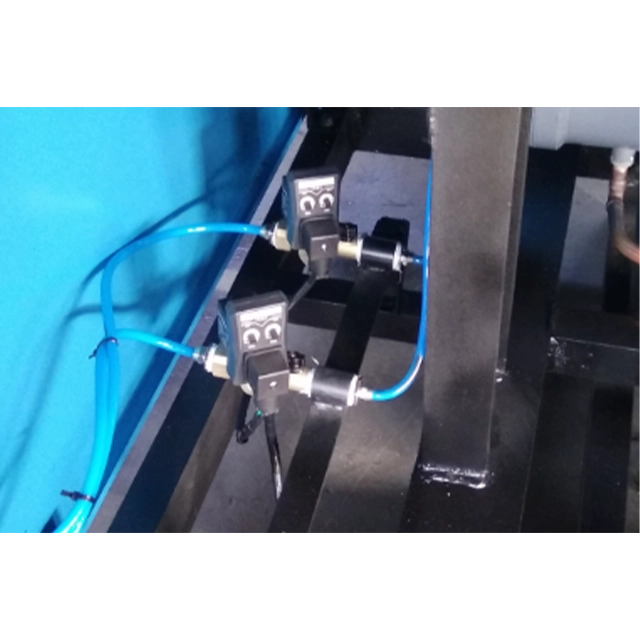
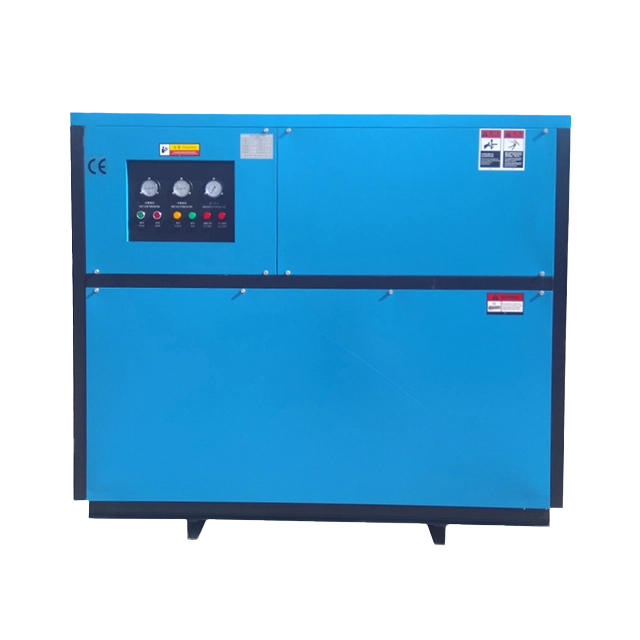
Equipped with an electronic timed drainer and accessible components, the dryer is easy to maintain. The automatic drain valve eliminates manual drainage tasks, while the clear control panel allows operators to monitor and adjust settings with minimal training.
Moisture Removal and Dew Point Control
The primary functionality of the water-cooled freezing dryer is to remove moisture from compressed air, maintaining a stable dew point regardless of ambient temperature fluctuations. This ensures that downstream equipment and processes are not affected by condensation, preventing corrosion, blockages, and performance degradation.
Efficient Heat Exchange
Equipped with a counter-flow designed heat exchanger, the dryer maximizes heat transfer efficiency, minimizing energy consumption while achieving optimal cooling results. The heat exchanger’s compact design also reduces the overall footprint of the equipment, making it suitable for space-constrained facilities.
Adaptive Operation in High-Temperature Environments
Unlike air-cooled dryers, which are sensitive to ambient temperature, the normal temperature water-cooled dryer operates independently of environmental conditions. It uses industrial circulating water for cooling, making it ideal for high-temperature workshops, summer operations, or regions with hot climates.
| What is the difference between a water-cooled and air-cooled freezing dryer? The main difference lies in the cooling medium. The Normal Temperature Water-Cooled Freezing Dryer uses industrial circulating water, making it more suitable for high-temperature environments and applications requiring a stable dew point. Air-cooled dryers rely on ambient air, which can be less efficient in hot conditions. | Can the dryer be used in high-humidity areas? Yes, the dryer is designed to handle high-humidity environments. Its efficient gas-liquid separation system and water-cooled refrigeration cycle effectively remove moisture from compressed air, even in regions with high ambient humidity. |
| How often does the dryer require maintenance? Regular maintenance includes cleaning the heat exchanger, inspecting the refrigeration system, and checking the automatic drain valve. The frequency depends on usage, but typical maintenance intervals are recommended based on operating hours to ensure optimal performance. | What is the benefit of a stable dew point for industrial processes? A stable dew point prevents condensation in downstream pipelines and equipment, avoiding corrosion, blockages, and product contamination. It ensures consistent process quality, reduces downtime, and protects expensive machinery from moisture-related damage. |
| Is the dryer compatible with different types of compressors? Yes, the water-cooled freezing dryer is compatible with most industrial compressors, including screw compressors, piston compressors, and centrifugal compressors. It can be integrated into existing compressed air systems with minimal modifications. |