A well-designed compressed air piping system helps factories deliver stable air pressure, reduce energy waste, and lower operational costs. Although the air compressor generates compressed air, the piping network determines how efficiently that air reaches production equipment.
Poor piping design can create pressure drops, uneven airflow, and unnecessary energy consumption. Over time, these issues increase the workload of the air compressor and raise operating expenses.
This guide explains the main principles of compressed air piping design, including pipe sizing, layout planning, material selection, pressure loss control, and maintenance tips.
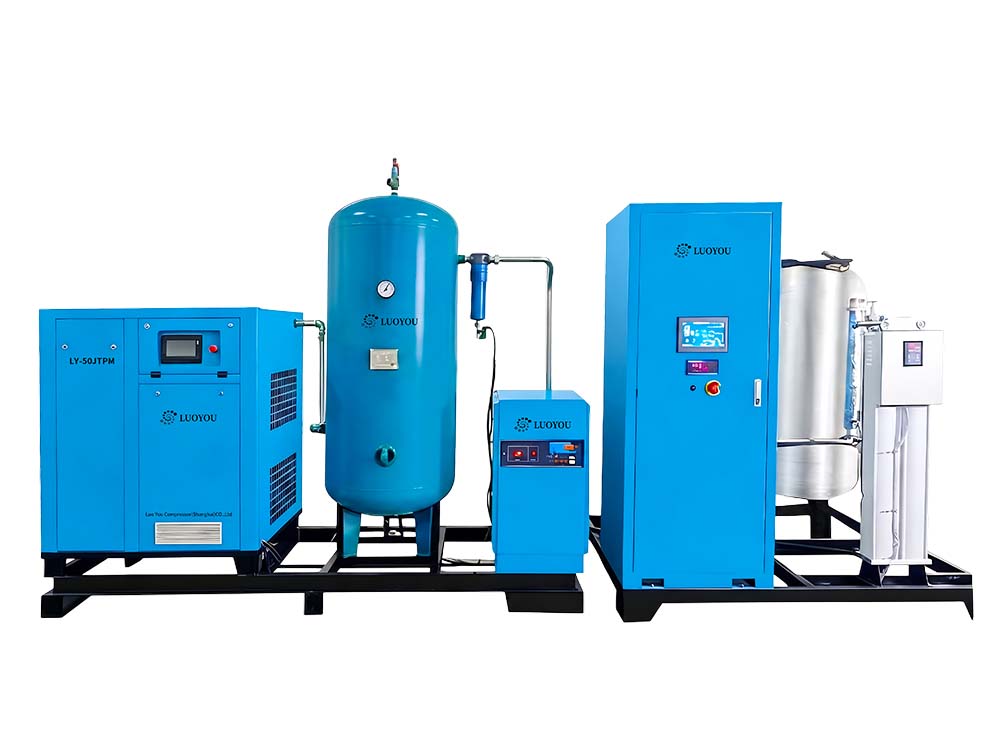
A compressed air piping system is the network of pipes, fittings, valves, and connections used to transport compressed air from the compressor room to points of use.
A complete system usually includes:
· Air compressor
· Air receiver tank
· Air dryer
· Filters
· Main distribution pipes
· Branch lines
· Drain systems
The goal of the piping system is to deliver clean, dry air at the required pressure and flow rate with minimal energy loss.
Compressed air is one of the most widely used utilities in industrial facilities. However, it is also one of the most expensive forms of energy.
An inefficient piping system can cause:
· Pressure drops
· Reduced equipment performance
· Higher compressor workload
· Increased electricity consumption
· Higher operational costs
When pressure losses occur, operators often increase compressor pressure settings to compensate. This increases energy use and operating expenses.
A properly designed system allows the air compressor to operate more efficiently while maintaining stable air supply.
Pipe diameter has a direct impact on airflow and pressure loss.
If pipes are too small:
· Air velocity increases
· Pressure drops become higher
· Equipment may receive insufficient air
Larger pipes allow compressed air to move with less resistance.
However, oversized pipes may increase installation costs. The correct pipe size should be selected based on:
· Required airflow
· Operating pressure
· Pipe length
· Future expansion plans
A good layout helps compressed air move efficiently throughout the facility.
Common industrial designs include:
A ring layout connects the main piping into a loop.
Advantages:
· More stable pressure
· Multiple air supply paths
· Lower pressure loss
Ring systems are commonly used in large factories.
A straight piping layout is simple and low-cost.
However, pressure may decrease as air travels farther from the compressor.
It is suitable for smaller facilities with limited air demand.
Pressure drop is one of the most common problems in compressed air systems.
Pressure loss can happen because of:
· Small pipe diameter
· Long piping distances
· Too many elbows and fittings
· Dirty filters
· Poor connections
To reduce pressure drops:
· Use properly sized pipes
· Minimize unnecessary bends
· Keep piping routes simple
· Maintain filters regularly
Lower pressure drop helps reduce compressor energy consumption.
Different materials can be used for compressed air piping.
Common options include:
Advantages:
· Lightweight
· Easy installation
· Corrosion resistant
Advantages:
· High durability
· Suitable for demanding environments
Advantages:
· Good corrosion resistance
· Smooth internal surface
The best choice depends on the factory environment, air quality requirements, and budget.
Proper installation improves long-term system performance.
Important practices include:
· Installing pipes with proper support
· Avoiding unnecessary sharp turns
· Using quality fittings
· Installing drainage points
· Checking connections for leaks
Poor installation can create hidden losses and maintenance problems.
Leaks are a common source of wasted energy.
A small leak may seem harmless, but many leaks throughout a factory can significantly increase compressor operation time.
Common leak locations include:
· Pipe joints
· Fittings
· Valves
· Quick connectors
Regular leak inspections help maintain system efficiency and reduce electricity costs.
A piping system must deliver clean and dry compressed air.
Moisture and contamination can cause:
· Pipe corrosion
· Equipment damage
· Product quality problems
Proper air treatment equipment includes:
· Air dryers
· Air filters
· Moisture separators
Good air quality also helps extend the service life of downstream equipment.
The air compressor produces the compressed air, but the piping system controls how efficiently that air is delivered.
A poorly designed piping network may force the compressor to:
· Run at higher pressure
· Operate longer hours
· Consume more electricity
A well-designed system allows the compressor to work at lower pressure while meeting production requirements.
This improves:
· Energy efficiency
· Equipment reliability
· Total operating costs
Small pipes increase resistance and create unnecessary pressure loss.
Each elbow and connection creates additional airflow resistance.
Factories often increase production capacity over time.
A piping design should consider future air demand to avoid expensive upgrades.
Water accumulation can damage pipes and affect compressed air quality.
A practical design process includes:
Determine:
· Required airflow
· Operating pressure
· Number of machines using compressed air
Match the piping system with the air compressor capacity and application needs.
Choose the best route while minimizing pipe length and pressure losses.
Consider airflow requirements, pressure, environment, and future expansion.
After installation:
· Check pressure levels
· Inspect for leaks
· Monitor airflow
· Adjust settings if needed
A ring main piping system is often preferred for industrial applications because it provides stable pressure and allows air to reach equipment from multiple directions.
Pressure loss can be reduced by using the correct pipe size, minimizing bends, maintaining filters, and repairing air leaks.
The correct pipe size depends on airflow requirements, pipe length, operating pressure, and future expansion needs.
Yes. Poorly designed piping increases pressure losses, which can force the air compressor to work harder and consume more energy.
Regular inspections should be performed as part of a compressed air maintenance program. Leak checks and pressure monitoring help identify problems early.
An efficient compressed air piping system helps factories maintain stable air supply while reducing energy waste and operational costs. Proper pipe sizing, layout planning, leak prevention, and regular maintenance all contribute to better system performance.
The air compressor is only one part of a compressed air system. A well-designed piping network ensures that compressed air reaches every application efficiently, helping businesses improve reliability and control long-term operating expenses.