Selecting the right industrial air compressor affects efficiency, maintenance needs, and long-term operating cost. Two of the most commonly used technologies are the rotary screw compressor and the reciprocating air compressor (piston compressor).
Both belong to the category of positive displacement compressor systems, but they operate differently and serve different industrial demands.
This guide compares how each system works, where they perform best, and how they affect cost of ownership, efficiency, and service life.
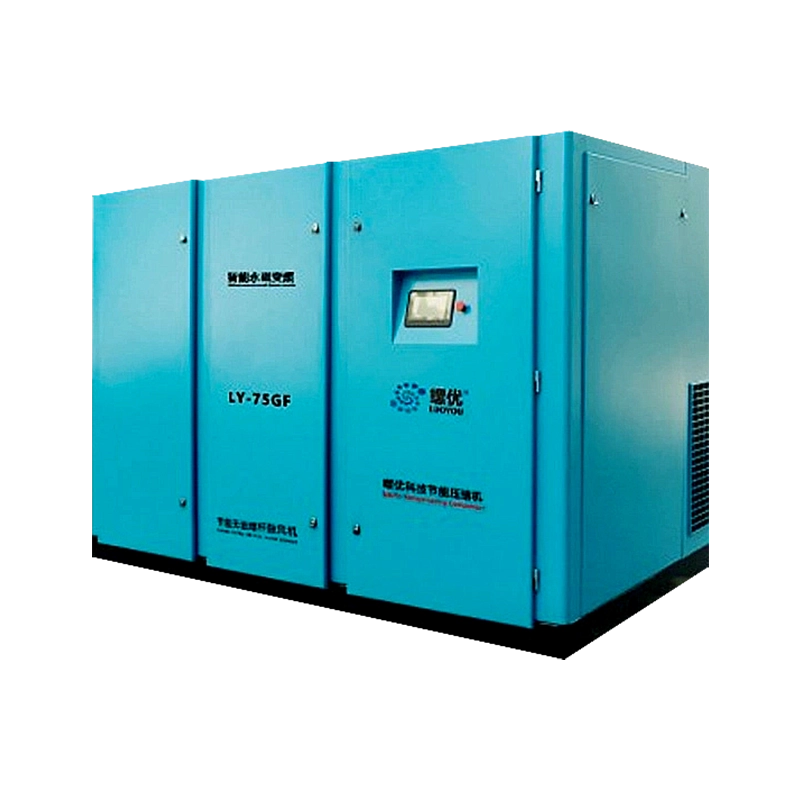
All compressors function by reducing air volume so that air is compressed into a smaller space, increasing pressure for industrial use.
This process happens inside a compression chamber, where mechanical motion reduces air volume and delivers pressurized air to tools and systems.
The two main types differ in how this compression process is achieved.
A rotary screw air compressor uses two rotating screws (rotors) to compress air continuously.
· Air enters the compression chamber
· Two rotors trap and compress air
· Air is continuously discharged
This results in smooth and steady airflow.
· Continuous operation
· Stable airflow output
· Suitable for high efficiency industrial systems
· Works well under long duty cycles
· Lower vibration
· Fewer moving parts than piston systems
· Suitable for long term industrial use
· Better energy efficiency with variable speed drives
· Higher initial investment
· More complex maintenance systems
Rotary screw systems are widely used where stable airflow is required across production lines.
A reciprocating air compressor (or piston compressor) uses a piston driven inside a cylinder to compress air.
· Air enters the cylinder
· Piston compresses air during movement
· Air is released at high pressure stages
· Intermittent operation
· Suitable for smaller air demand
· Higher pressure output capability in short bursts
· Lower purchase cost
· Simple design
· Easy maintenance in basic setups
· Higher vibration and noise
· Limited duty cycle
· Less suitable for continuous industrial use
| Feature | Rotary Screw Compressor | Reciprocating Compressor |
| Airflow | Continuous | Intermittent |
| Pressure output | Stable | High but pulsed |
| Efficiency | High efficiency | Moderate |
| Maintenance | Lower frequency | Higher wear parts |
| Noise | Low | Higher |
| Cost of ownership | Lower long term | Higher long term |
Modern rotary screw compressors often use variable speed drives (VSD) to adjust motor speed based on air demand.
This helps:
· Reduce energy consumption
· Match output with usage
· Improve system efficiency
Reciprocating systems do not typically integrate VSD technology as effectively due to their operating design.
Both compressor types are available in oil-lubricated and oil free compressor versions.
· Use oil for lubrication inside moving parts
· Risk of oil carryover if filtration is poor
· Provide cleaner air output
· Preferred in sensitive industries
· Higher upfront cost but lower contamination risk
· Medium to high airflow demand
· Continuous industrial operation
· Manufacturing, automotive, packaging
· High pressure applications
· Small workshops
· Intermittent usage environments
Both systems support a wide range of industrial applications depending on demand profile.
When evaluating cost of ownership, consider:
· Higher initial cost
· Lower energy cost over time
· Reduced downtime
· Longer service life
· Lower purchase cost
· Higher maintenance frequency
· More wear parts replacement
· Higher long-term operational cost
Over extended long term use, rotary screw systems often become more economical in industrial settings.
· Fewer mechanical failures
· Longer service intervals
· Stable performance under continuous load
· Frequent valve and piston maintenance
· Higher wear due to friction
· Shorter service life under heavy use
Proper maintenance affects both systems significantly, especially under demanding conditions.
Air quality depends on filtration and compressor design.
· Rotary screw systems: lower risk of contamination
· Reciprocating systems: higher chance of oil carryover if not maintained
For applications requiring clean air, such as food or electronics, oil-free systems are often preferred.
· Continuous airflow is required
· Energy efficiency is important
· Industrial production runs 24/7
· Long-term reliability matters
· Low to medium air demand
· Budget is limited
· Intermittent operation is expected
Rotary screw compressors provide continuous airflow, while piston compressors deliver air in pulses at higher pressure.
Rotary screw compressors are generally more energy efficient, especially when using variable speed drives.
Rotary screw compressors often have lower long-term operating costs due to reduced maintenance and higher efficiency.
Yes, but they are better suited for small-scale or intermittent applications rather than continuous industrial demand.
Yes, both rotary screw and reciprocating compressors are available in oil-free designs for clean air applications.
Both rotary screw air compressors and reciprocating compressors serve important roles in compressed air systems. Rotary screw systems excel in continuous, high-efficiency industrial environments, while piston compressors remain practical for smaller or intermittent applications.
Selecting between them depends on airflow demand, pressure requirements, energy goals, and long-term operating expectations.