Most CNC machines need clean, dry, stable compressed air. Typical CNC air requirements range from 5–20 CFM at 90–120 PSI depending on machine size, tool changers, and automation. Choosing the correct air compressor for CNC ensures stable machining operations, fewer shutdowns, and longer equipment life.
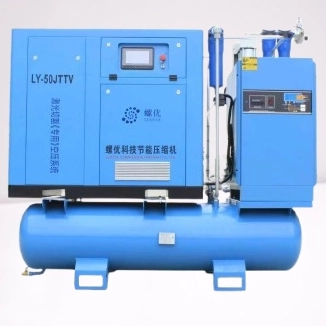
A reliable compressed air system is a standard part of modern machining operations. Compressed air is used for:
· Automatic tool changers
· Pneumatic clamps and actuators
· Chip removal and air blast cleaning
· Spindle air purge and sealing
· Coolant mist systems
· Door operation and safety mechanisms
Without stable air supply, CNC machines can stop mid-cycle, produce inconsistent parts, or trigger alarms.
Most CNC equipment runs within:
· 90–120 PSI (6–8 bar) working pressure
· Some high-speed spindles may require up to 140 PSI
Maintaining stable air pressure prevents machine faults and tool change failures.
| CNC Machine Type | Typical CFM Requirements |
| Small CNC router | 4–6 CFM |
| Vertical machining center | 6–12 CFM |
| Large machining center | 12–20 CFM |
| CNC with automation/robots | 20–30+ CFM |
Always check the machine manual before sizing the compressor.
Providing compressed air for machining is not only about pressure and flow. Air quality directly affects reliability.
Poor-quality air can cause:
· Moisture in pneumatic valves
· Rust inside cylinders
· Oil contamination on finished parts
· Sensor malfunction
· Reduced tool life
A CNC-ready compressed air system normally includes:
· Air compressor
· Air dryer
· Line filters
· Air receiver tank
Clean, dry air keeps machining operations stable and reduces downtime.
List all machines and sum their airflow:
Example shop:
· CNC milling machine → 10 CFM
· CNC lathe → 8 CFM
· Air blow gun → 5 CFM
Total demand = 23 CFM
Add a safety margin of 25–30% for leaks and expansion.
Final requirement: 30 CFM
Most shops standardize at 100 PSI to ensure stable delivery across the air supply network.
Best for CNC shops running daily production.
Advantages:
· Continuous operation
· Stable pressure output
· Lower noise levels
· Energy efficient at steady loads
Suitable when:
· One CNC machine
· Intermittent usage
· Lower budget
The air receiver tank stabilizes pressure and reduces compressor cycling.
General guideline:
· Small shop → 100–200 liters
· Medium shop → 300–500 liters
· Large CNC workshop → 500–1000+ liters
A larger tank improves pressure stability during tool changes.
A complete compressed air system includes:
1. Air compressor
2. Aftercooler
3. Air dryer (refrigerated or desiccant)
4. Pre-filter and fine filter
5. Air receiver tank
6. Distribution piping
This layout ensures consistent air supply to all CNC machines.
Too little airflow leads to:
· Pressure drops
· Machine alarms
· Slower cycle times
Leaks can waste 20–30% of compressor capacity.
Moisture is one of the most common causes of pneumatic failures.
Always allow room for future machines.
Running an oversized or poorly sized compressor increases electricity usage.
Ways to improve efficiency:
· Fix air leaks regularly
· Use variable speed compressors for varying loads
· Lower system pressure when possible
· Maintain filters and dryers
Efficient compressed air reduces operating costs over time.
Shop setup:
· 3 CNC machining centers
· 1 CNC lathe
· 2 air blow stations
Estimated airflow:
· Machines: 36 CFM
· Tools & leaks: 10 CFM
Total requirement: 46 CFM
Recommended system:
· 50–60 CFM rotary screw compressor
· 500L air receiver
· Refrigerated air dryer
· Dual-stage filtration
Most machines operate at 90–120 PSI. Some high-speed applications may require higher pressure.
Yes. A properly sized compressed air system can supply an entire workshop.
Yes. Moisture damages pneumatic valves, sensors, and cylinders.
For continuous production and multiple machines, rotary screw compressors are the preferred option.
Typical usage ranges from 5–20 CFM, depending on machine size and automation.
Selecting the right air compressor for CNC starts with understanding airflow, pressure, and air quality needs. Proper sizing ensures reliable machining operations, stable air supply, and lower operating costs. A well-designed compressed air system supports long-term shop productivity and consistent manufacturing results.