An air compressor for laser cutting must deliver stable pressure, clean and dry compressed air, and sufficient flow rate to support cutting performance. Choosing the right system improves cutting quality, reduces defects, and lowers operating costs.
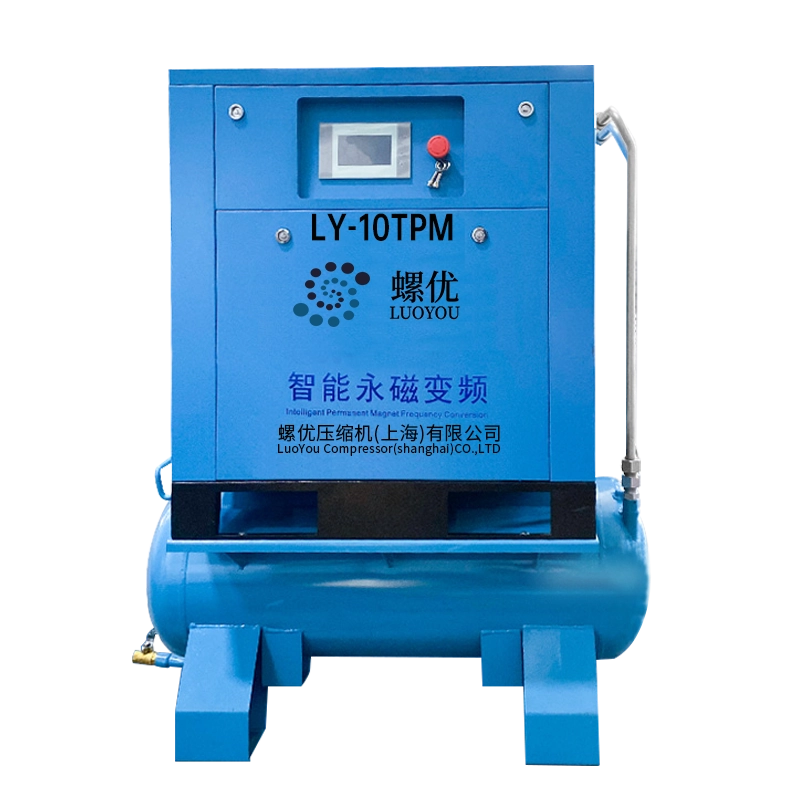
Laser cutting machines rely on a steady supply of compressed air to assist the cutting process. The air removes molten material, cools the cutting area, and protects the lens.
Unlike general industrial use, laser cutting demands:
· Consistent air pressure
· Clean, dry air with high air quality
· Stable flow rate
· Reliable operation over long periods
If the compressor does not meet these requirements, it can lead to rough edges, incomplete cuts, or increased maintenance.
Laser cutting systems require constant air pressure to maintain cutting precision. Fluctuations can affect cut quality and consistency.
· Typical range: 8–16 bar (depending on material and thickness)
· Pressure must remain stable during operation
The compressor must supply enough cubic feet per minute (CFM) to match the machine’s demand.
· Thin materials → lower airflow
· Thick materials → higher airflow
· Continuous cutting → higher demand
Choosing the right flow rate ensures smooth cutting without interruption.
High air quality is essential in laser cutting.
· Moisture can damage equipment
· Oil contamination affects cutting precision
· Dust particles can block nozzles
This is why many systems use:
· Oil free air compressors
· Air dryers
· Precision filters
Laser cutting often runs for long hours. The compressor must support continuous operation without overheating or pressure drops.
Rotary screw compressors are the most common choice.
· Designed for continuous operation
· Provide stable airflow
· Suitable for industrial laser cutting
Oil free air compressors are ideal when air purity is required.
· No risk of oil contamination
· High air quality output
· Suitable for precision cutting
These compressors use oil for lubrication.
· Lower initial cost
· Require filtration systems
· Suitable for less sensitive applications
A complete system includes more than just the compressor:
Removes moisture from compressed air to prevent condensation.
Remove oil, dust, and particles to maintain high air quality.
A storage tank helps stabilize pressure and handle peak demand.
Variable speed drive compressors adjust output based on demand.
· Maintain stable pressure
· Reduce energy consumption
· Improve efficiency
Some systems combine:
· Compressor
· Dryer
· Filters
· Storage tank
This simplifies installation and ensures compatibility.
For industries requiring high precision, oil-free systems provide consistent and clean compressed air.
Check the manufacturer’s requirements for:
· Air pressure
· Flow rate (CFM)
· Air quality
Estimate the total compressed air consumption based on operating hours and material thickness.
· Continuous use → rotary screw compressor
· Clean air requirement → oil free air compressor
· Budget-focused → oil-injected compressor
Energy-efficient systems help reduce long-term operating costs, especially in high-production environments.
· Causes poor cutting quality
· Solution: choose a compressor with higher capacity
· Leads to corrosion and defects
· Solution: install an air dryer
· Affects precision and equipment lifespan
· Solution: use oil-free systems or high-quality filters
· Results in inconsistent cutting
· Solution: use a storage tank and stable compressor
Rotary screw air compressors are widely used due to their stable airflow and continuous operation capability.
It depends on your application. For high-precision cutting, oil-free compressors are recommended to ensure clean air.
Most laser cutting systems require air pressure between 8 and 16 bar, depending on the material.
Poor air quality can cause defects, damage equipment, and reduce cutting precision.
It is possible, but not recommended unless it meets the required pressure, flow rate, and air quality standards.
Selecting the right air compressor for laser cutting involves more than just choosing a machine. It requires matching pressure, flow rate, and air quality to your application. By using a suitable compressor along with proper air treatment equipment, you can improve cutting performance, reduce defects, and maintain reliable operation over time.