Moisture in compressed air is one of the most common causes of corrosion, product defects, and equipment failure. Every compressed air system naturally produces water vapor during compression. Without proper drying, that moisture enters pipelines, air tools, and production equipment.
This guide explains how a compressed air dryer works, compares the main air dryer types, and helps you choose between a refrigerated air dryer and a desiccant air dryer.
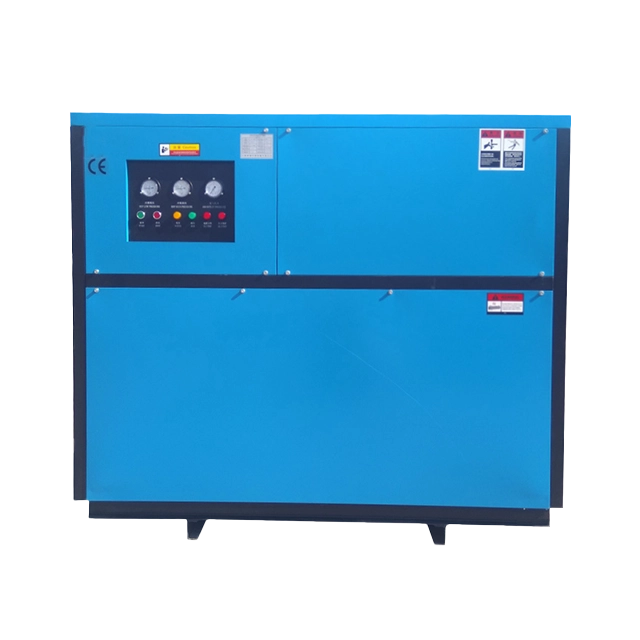
A compressed air dryer removes moisture from compressed air by cooling, adsorption, or membrane separation.
· Refrigerated dryers cool the compressed air to condense water vapor.
· Desiccant dryers use desiccant materials to absorb moisture and achieve lower dew points.
· Membrane air dryers separate water vapor using special fibers.
Air always contains humidity. When air is compressed, the concentration of water vapor increases dramatically. As the air cools in pipes, moisture condenses into liquid water.
Common problems caused by moisture:
· Corrosion in pipelines and equipment
· Contaminated products in food and beverage production
· Frozen lines in cold environments
· Reduced efficiency of pneumatic tools
· Poor surface finishing and painting defects
That is why most industrial applications require dried compressed air.
The main job of any compressed air dryer is to remove moisture from compressed air before it reaches downstream equipment.
Dryers reduce the pressure dew point, which is the temperature at which water vapor condenses at system pressure. A lower dew point means drier air.
The drying process typically includes:
1. Cooling the compressed air
2. Removing condensed liquid water
3. Removing remaining water vapor
4. Delivering clean and dried compressed air
There are three major types of compressed air dryers:
1. Refrigerated air dryer
2. Desiccant air dryer
3. Membrane air dryers
Each type is designed for different industrial applications and dryness levels.
A refrigerated air dryer works by cooling the compressed air so that water vapor condenses into liquid and can be separated.
1. Hot compressed air enters the dryer.
2. The air passes through a heat exchanger.
3. The air is cooled to about 3–5°C.
4. Cooling the compressed air causes moisture to condense.
5. A separator removes the liquid water.
6. The air is reheated to prevent pipeline condensation.
Typical pressure dew point: +3°C
· Energy efficient
· Low operating cost
· Simple maintenance
· Suitable for general industrial applications
· Workshops and manufacturing
· Pneumatic tools
· Packaging lines
· Automotive production
A refrigerated dryer is usually the first choice when extremely dry air is not required.
A desiccant air dryer removes water vapor through adsorption using desiccant materials such as activated alumina.
1. Compressed air passes through a tower filled with desiccant.
2. The desiccant removes water vapor from the air.
3. The air exits as ultra-dry compressed air.
4. A portion of air (purge air) regenerates the saturated desiccant.
Typical pressure dew point:
· −20°C
· −40°C
· −70°C (for very dry air)
· Produces extremely dry air
· Suitable for low-temperature environments
· Ideal for sensitive processes requiring high quality air
· Food and beverage production
· Pharmaceutical manufacturing
· Electronics and semiconductor industry
· Instrument air systems
· Outdoor pipelines in cold climates
A desiccant dryer uses purge air to regenerate the desiccant.
A small amount of dried compressed air flows backward through the saturated tower to remove moisture and prepare the desiccant for the next cycle.
Membrane air dryers use hollow fiber membranes that separate water vapor from compressed air.
· No moving parts
· No electricity required
· Compact and quiet
Typical use:
· Laboratory equipment
· Medical equipment
· Point-of-use drying
| Feature | Refrigerated Air Dryer | Desiccant Air Dryer |
| Dew point | +3°C | −20°C to −70°C |
| Energy consumption | Low | Higher |
| Maintenance | Simple | Moderate |
| Air dryness | Standard | Very dry |
| Best use | General industry | Sensitive applications |
When selecting a dryer, consider:
· General use → Refrigerated dryer
· Ultra dry air → Desiccant dryer
Food and beverage production and pharmaceuticals demand higher air quality.
Refrigerated dryers consume less energy. Desiccant dryers provide higher dryness levels but use purge air.
Outdoor installations or cold climates often require desiccant dryers.
Removing moisture from compressed air helps:
· Prevent corrosion
· Reduce downtime
· Improve product quality
· Extend equipment life
· Maintain stable air pressure
Dry air leads to more reliable compressed air systems.
A compressed air dryer removes water vapor and moisture from compressed air to protect equipment and maintain air quality.
Refrigerated dryers cool the air to condense moisture, while desiccant dryers absorb water vapor using desiccant materials.
Most industrial applications use +3°C. Sensitive processes may require −40°C or lower.
Moisture causes corrosion, contamination, freezing, and equipment failure.
Pharmaceutical, food and beverage, electronics, and outdoor installations often require very dry air.
A compressed air dryer is an essential part of any compressed air system. Refrigerated dryers provide cost-effective drying for general use, while desiccant dryers deliver extremely dry air for demanding applications. Selecting the right dryer depends on the required dew point, industry standards, and operating environment.