Choosing between reciprocating vs rotary screw compressors is one of the most common decisions in compressed air systems. Both machines create compressed air, but they work in different ways, serve different workloads, and have different operating costs. This guide explains the differences clearly so you can choose the right solution.
Reciprocating compressors (piston air compressors) are best for intermittent use, lower budgets, and high pressure tasks.
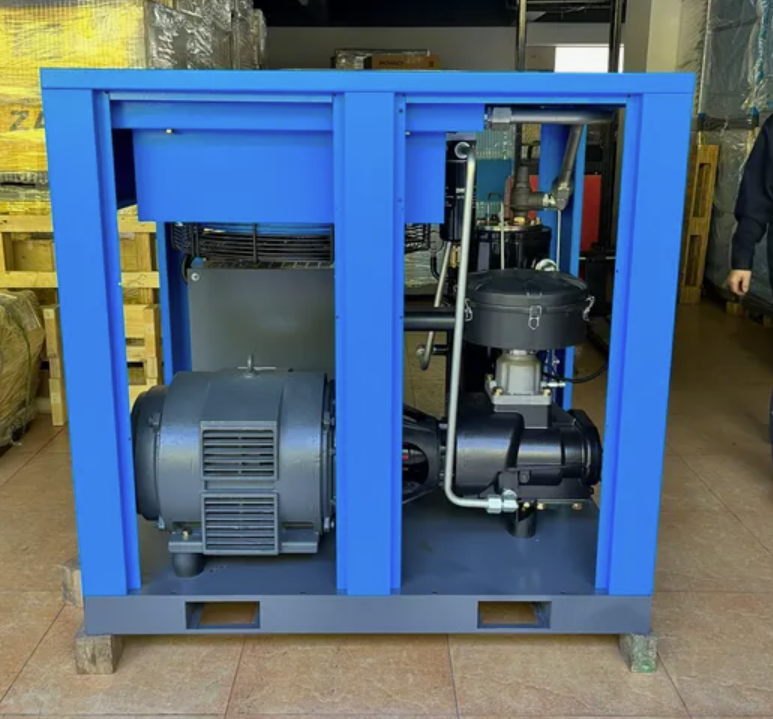
Rotary screw air compressors are designed for continuous operation, higher flow rate needs, and energy efficient industrial use.
Industrial air systems generally use four main types of compressors:
1. Reciprocating compressors (piston)
2. Rotary screw compressors
3. Centrifugal compressors
4. Axial compressors
The first two belong to positive displacement compressors, meaning they trap air and reduce its volume to increase pressure.
Centrifugal and axial machines rely on rotating blades and high-speed airflow, typically used in very large facilities.
For most workshops and factories, the real comparison is piston vs screw compressor.
A piston air compressor uses cylinders and pistons driven by a crankshaft.
How compressors work in this design:
1. Air enters a cylinder.
2. Pistons driven compress the air.
3. Compressed air exits into the tank.
These machines are often called reciprocating air compressors because the piston moves back and forth.
· Lower initial cost
· Capable of high pressure
· Simple design and maintenance
· Suitable for intermittent use
· Good for small shops and garages
· Higher noise levels
· Not ideal for continuous operation
· More vibration and heat
· Shorter lifespan under heavy workloads
A screw compressor uses two interlocking rotary screws to compress air continuously.
Inside the airend:
· Air enters the chamber
· Twin rotors compress air smoothly
· Air exits at steady pressure and flow
These machines are commonly called rotary screw air compressors.
· Continuous duty operation
· Stable flow rate
· Lower operating costs
· Quiet operation
· More energy efficient
· Long service life
· Higher upfront investment
· Requires professional servicing
· Overkill for occasional use
| Feature | Reciprocating Compressors | Rotary Screw Compressors |
| Best Use | Intermittent use | Continuous operation |
| Initial Cost | Lower | Higher |
| Operating Costs | Higher long term | Lower long term |
| Noise Levels | Loud | Quiet |
| Flow Rate | Pulsating | Continuous |
| Maintenance | Frequent | Scheduled, predictable |
| Lifespan | Shorter under heavy use | Longer |
| Energy Efficient | Moderate | High |
The biggest technical difference is flow rate and duty cycle.
· Reciprocating compressors:
Run in start-stop cycles. Good when air demand varies.
· Rotary screw compressors:
Deliver a steady supply of compressed air 24/7.
If your plant runs multiple shifts or has automated equipment, screw machines are usually the better match.
While the debate focuses on piston vs screw compressor, larger facilities may use:
· Use high-speed impellers
· Best for very large airflow demand
· Found in refineries and power plants
· Use rows of rotating blades
· Provide massive airflow
· Common in aerospace and gas turbines
These machines cover a wide range of very large industrial applications.
Many buyers focus on purchase price, but lifetime cost tells the full story.
· Lower purchase price
· Higher maintenance
· Higher electricity consumption
· More downtime
· Higher purchase price
· Lower energy use
· Reduced downtime
· Lower long-term operating costs
Over several years, screw compressors often cost less overall in continuous applications.
Noise matters in real workplaces.
· Reciprocating compressors: 80–95 dB
· Rotary screw compressors: 60–75 dB
Lower noise improves safety, comfort, and productivity.
Choose a reciprocating compressor if you:
· Use air tools occasionally
· Run a small workshop or garage
· Need high pressure for short periods
· Have a limited budget
· Use compressed air less than 4–5 hours per day
Choose a rotary screw compressor if you:
· Need continuous compressed air
· Operate manufacturing equipment
· Run multiple shifts
· Want lower energy bills
· Require stable air supply
Choose piston compressors for:
· Intermittent demand
· Lower initial cost
· Small businesses
Choose screw compressors for:
· Continuous operation
· Higher efficiency
· Industrial production
Reciprocating compressors use pistons driven in a cylinder, while rotary screw compressors use interlocking rotors to compress air continuously.
Rotary screw compressors usually last longer in continuous-duty environments because they run cooler and experience less wear.
Yes. They consume less electricity when running continuously and provide a steady airflow without frequent start-stop cycles.
They can reach very high pressure levels, which makes them suitable for specialized applications requiring high pressure air.
Reciprocating air compressors are often the better option for small workshops because of their lower initial cost and suitability for intermittent use.
If you’re planning a compressed air system, matching compressor type to workload will help you avoid overspending and improve long-term reliability.
Choosing between reciprocating and rotary screw compressors comes down to how much air you need, how often you need it, and how much you plan to spend over time. Reciprocating compressors are well suited for intermittent use, smaller workshops, and applications that need higher pressure in short bursts. Rotary screw compressors are designed for continuous operation, delivering stable airflow, lower noise, and better energy efficiency for industrial environments.
Instead of focusing only on the initial price, it helps to evaluate total operating costs, maintenance requirements, and long-term reliability. By matching the compressor type to your workload, duty cycle, and airflow demand, you can ensure consistent compressed air supply while keeping energy consumption and downtime under control.