Oil-free and oil-injected air compressors are two common types of air compressor systems. The main difference lies in whether oil is used inside the compression chamber. Oil-free air compressors deliver clean compressed air with no risk of oil contamination, while oil-injected compressors use oil for lubrication, cooling, and sealing, offering durability and efficiency for general industrial use.
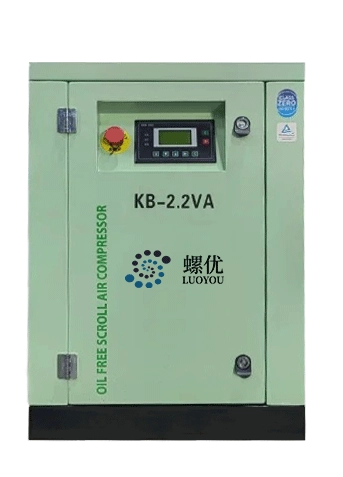
Oil free air compressors are designed to compress air without introducing oil into the compression chamber. Instead of oil, they rely on alternative materials and designs, such as teflon coated components, to reduce friction between moving parts.
· No oil in the compression chamber
· Clean, high-quality compressed air
· Lower risk of oil contamination
· Often used in sensitive industries
Because the compressor includes specialized coatings and precision engineering, it can operate without oil while maintaining performance.
Oil injected compressors, also known as oil lubricated air compressors or oil flooded air compressors, use oil for lubrication, sealing, and cooling during the compression process.
· Oil is injected into the compression chamber
· It reduces friction between moving parts
· It helps control heat generation
· It improves sealing and efficiency
After compression, the oil is separated from the compressed air through filtration systems.
| Feature | Oil-Free Air Compressors | Oil-Injected Compressors |
| Lubrication | No oil used | Uses oil for lubrication |
| Air Quality | High purity | May contain trace oil |
| Risk of Contamination | No risk of oil contamination | Possible if filtration fails |
| Maintenance Costs | Higher | Lower |
| Durability | Depends on design | Generally more robust |
| Heat Management | Higher heat generation | Better cooling with oil |
| Applications | Food, medical, electronics | General industrial use |
Since no oil is used, there is no risk of oil contamination, making them suitable for applications requiring high air quality.
Industries such as food, pharmaceuticals, and electronics often require oil-free compressed air.
Less need for complex filtration systems compared to oil lubricated compressors.
Using oil for lubrication helps reduce wear and manage heat generation, improving overall performance.
Oil lubricated compressors are typically more affordable and easier to maintain.
Oil reduces friction between moving parts, leading to less wear over time.
· Higher upfront cost
· More sensitive to operating conditions
· Potentially higher maintenance costs due to specialized components
· Possible risk of oil contamination
· Requires filtration and oil separation systems
· Not suitable for applications requiring pure air
· You need clean compressed air
· You operate in food, pharmaceutical, or electronics industries
· Air purity is a priority
· Your application is general industrial use
· You need durability and cost efficiency
· Small amounts of oil in air are acceptable
Modern compressors are designed to meet specific operational requirements. Whether you choose oil free and oil injected systems depends on:
· Required air quality
· Budget and operating cost expectations
· System complexity
· Industry standards
Each type of air compressor is built with a different balance between performance, cost, and air purity.
Oil-free compressors do not use oil in the compression chamber, while oil-injected compressors use oil for lubrication and cooling.
They are better for applications requiring clean air, but not always necessary for general industrial use.
They can introduce small amounts of oil into the compressed air, but filtration systems reduce this risk.
Oil-injected compressors usually have lower maintenance costs due to simpler design and better lubrication.
It is not recommended unless additional filtration is installed, as there is still a risk of oil contamination.
Both oil-free and oil-injected compressors have their advantages depending on the application. Oil-free air compressors are ideal when air purity is required, while oil-injected compressors offer durability and cost efficiency for general use. Understanding your operational needs and air quality requirements will help you select the right solution for your system.