A VSD air compressor (Variable Speed Drive compressor) is a type of compressor that adjusts the motor speed to match the demand for compressed air in real time. Unlike fixed speed compressors, it automatically adjusts the compressor output, resulting in energy savings, stable pressure, and more efficient operation.
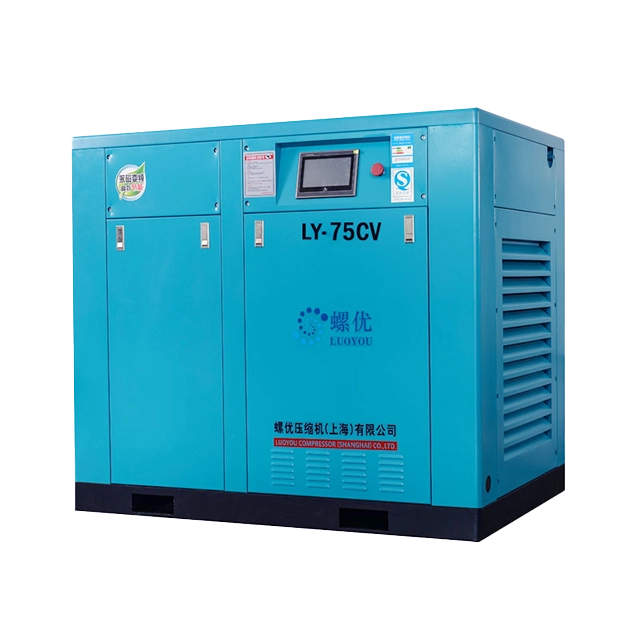
A VSD air compressor, also known as a variable speed compressor, uses variable speed drive (VSD) technology to control the motor speed based on air demand.
Traditional fixed speed compressors run at a constant speed, regardless of how much compressed air is needed. In contrast, a VSD compressor adjusts the motor speed to meet the required flow rate and power consumption, avoiding unnecessary energy use.
This makes vsd compressors a preferred choice for industries aiming to reduce energy consumption and improve system efficiency.
Variable speed drive technology controls how fast the compressor motor runs. Instead of switching between full load and idle states, the system continuously adjusts output.
The motor adapts its speed depending on the demand for compressed air:
1. Low Demand
The compressor slows down, reducing power consumption.
2. High Demand
The system increases motor speed to deliver the required amount of compressed air.
3. Real-Time Adjustment
The compressor responds to changes instantly and automatically adjusts the compressor output.
This process ensures the compressor always matches demand in real time, avoiding wasted energy.
· Run at constant motor speed
· Frequently switch between load and unload cycles
· Higher energy consumption during low demand
· Less flexible in fluctuating conditions
· Adjust motor speed to meet demand
· Provide consistent pressure
· Reduce energy waste
· Deliver significant energy savings
When comparing variable speed drive vsd systems with traditional models, the main difference is how efficiently they respond to changing air requirements.
The biggest advantage of a variable speed compressor energy saving design is reduced electricity usage. By matching output to demand, the compressor avoids running at full capacity when it is not needed.
Many users report significant energy savings, especially in systems with fluctuating air demand.
Since the compressor only produces the required amount of compressed air, it avoids unnecessary operation. This leads to lower energy consumption and reduced operating costs.
VSD systems maintain a consistent pressure level by adjusting speed smoothly. This improves the performance of downstream equipment.
Because the system does not rely on frequent start-stop cycles, components experience less stress, extending service life.
A speed air compressor using VSD technology is more energy efficient, especially in applications where air demand varies throughout the day.
VSD air systems are widely used in industries where air demand changes frequently:
· Manufacturing and assembly lines
· Food and beverage processing
· Textile production
· Electronics and precision industries
· Automotive manufacturing
In these environments, the ability to adjust motor speed to meet varying demand leads to better efficiency and cost control.
When selecting a VSD compressor, consider:
Analyze whether your demand for compressed air fluctuates. VSD compressors are most effective in variable load conditions.
Ensure the compressor can deliver the necessary flow rate and power consumption for your operations.
If reducing energy costs is a priority, VSD systems can help achieve long-term savings.
Check integration with existing rotary screw compressors or compressed air systems.
Although VSD compressors may have a higher upfront cost, the long-term savings from reduced energy consumption often offset the initial investment.
Over time, businesses benefit from:
· Lower electricity bills
· Reduced maintenance costs
· Improved operational efficiency
A VSD air compressor uses variable speed drive technology to adjust the motor speed based on real-time air demand, improving efficiency and reducing energy consumption.
It saves energy by adjusting the motor speed instead of running continuously at full capacity. This reduces wasted power when demand is low.
VSD compressors adjust motor speed to match demand, while fixed speed compressors run at a constant speed and rely on load/unload cycles.
They are most effective in applications with fluctuating air demand. In constant-load environments, the benefits may be less noticeable.
Maintenance is similar to standard compressors, but proper monitoring of the drive system and electrical components is recommended.
A VSD air compressor offers a more flexible and energy-efficient solution compared to traditional systems. By using variable speed drive technology, it adjusts output based on real-time demand, reduces energy consumption, and delivers consistent performance. For industries with varying air requirements, VSD compressors provide a practical way to improve efficiency and control operating costs.