The food and beverage industry relies heavily on compressed air for production, packaging, conveying, bottling, cleaning, and product handling. Because compressed air often comes into direct or indirect contact with products, maintaining high levels of air purity is a major concern. Choosing between oil-free compressors and oil lubricated compressors can significantly affect product quality, compliance, maintenance requirements, and operating costs.
This guide explains the differences between oil free air compressors and lubricated systems, the risks of contamination, applicable standards, and how to select the right solution for food processing applications.
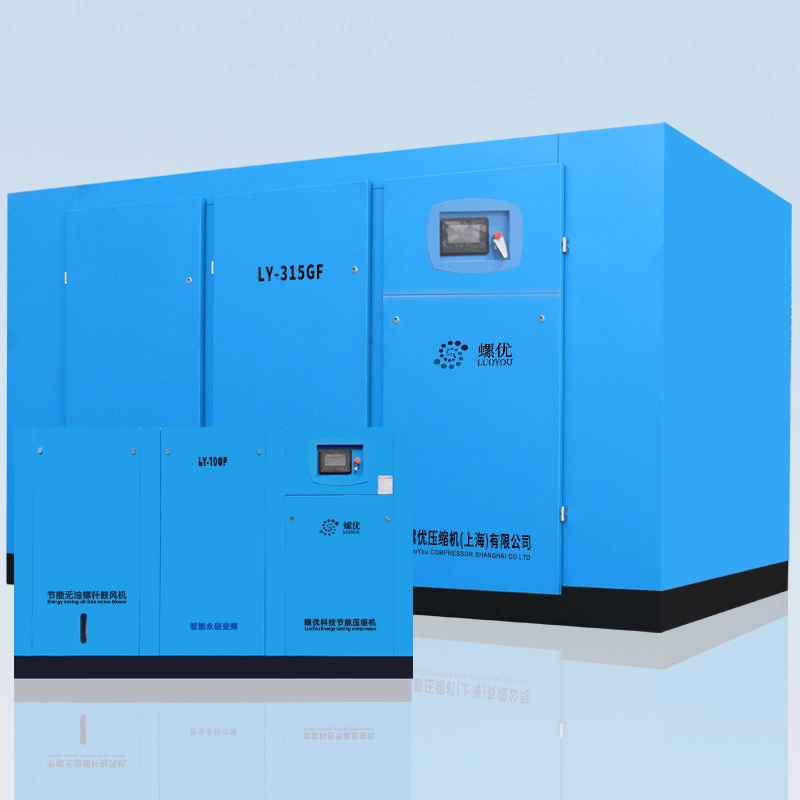
Many food manufacturers consider compressed air a processing ingredient because it frequently comes into contact with products during production.
Common applications include:
· Food packaging
· Bottle filling
· Product conveying
· Ingredient mixing
· Air knife drying
· Pneumatic controls
· Cleaning operations
When compressed air comes into contact with food, contamination can affect product quality, consumer safety, and regulatory compliance.
This makes contamination prevention a key objective for food manufacturers.
Oil-free compressors are designed to compress air without introducing oil into the compression process.
Unlike lubricated systems, there is no oil inside the primary compression chamber.
In an oil-free design:
· Air is compressed without direct oil contact.
· Special coatings and materials reduce friction.
· Bearings may still use lubricants, but they remain isolated from the compressed air path.
Common types include:
Rotary screw oil-free units use specially engineered airends that prevent oil from entering the compression chamber.
Benefits include:
· High airflow capacity
· Continuous operation
· Consistent air quality
· Suitable for large production facilities
Oil free scroll compressors use interlocking scroll elements to compress air.
Advantages include:
· Quiet operation
· Compact footprint
· Clean compressed air
· Lower airflow requirements
These systems are often used in laboratories, packaging lines, and specialty food production facilities.
Oil lubricated compressors use oil for:
· Lubrication
· Cooling
· Sealing
· Wear protection
A lubricated air compressor introduces compressor oil into the compression process to reduce friction and improve efficiency.
Common examples include:
· Rotary screw compressors
· Reciprocating compressors
· Industrial lubricated systems
Advantages include:
· Lower purchase price
· High efficiency
· Longer component life
· Reliable operation under heavy loads
However, additional air treatment is often required to remove oil contaminants.
The primary concern with lubricated compressors is the potential for oil contamination.
Even small amounts of oil can create problems when compressed air contacts products.
Possible risks of contamination include:
· Product recalls
· Regulatory violations
· Product quality issues
· Customer complaints
· Production downtime
The level of risk depends on how compressed air is used within the facility.
Not every food application carries the same level of contamination risk.
Compressed air directly touches food products during processing.
Examples:
· Ingredient mixing
· Product conveying
· Drying food surfaces
· Aeration processes
For direct contact applications, food grade compressed air is generally recommended.
In indirect contact applications, compressed air does not directly touch the food.
Examples:
· Pneumatic cylinders
· Packaging machinery
· Control systems
· Material handling equipment
Although contamination risk is lower, air quality remains important.
Food manufacturers often require food grade air that meets strict air quality standards.
Key objectives include:
· Eliminating oil contamination
· Reducing moisture
· Removing particles
· Maintaining consistent air purity
Food-grade systems typically include:
· Air compressors
· Filtration systems
· Air dryers
· Monitoring equipment
The most widely referenced compressed air quality standard is ISO 8573-1.
This standard classifies compressed air based on:
· Solid particles
· Water content
· Oil content
Manufacturers use ISO 8573-1 classifications to establish acceptable air quality levels for specific applications.
For food production, low oil-content classes are commonly specified to support contamination prevention programs.
| Feature | Oil-Free Compressors | Oil-Lubricated Compressors |
| Air Purity | Excellent | Depends on filtration |
| Risk of Oil Contamination | Extremely Low | Higher |
| Initial Investment | Higher | Lower |
| Maintenance Requirements | Moderate | Moderate to High |
| Energy Efficiency | Good | Often Very Good |
| Food Industry Suitability | Excellent | Application Dependent |
| Compliance Support | Easier | Requires Additional Controls |
The answer depends on the application.
· Air directly contacts food
· Air purity requirements are strict
· Regulatory compliance is a priority
· Contamination risk must be minimized
· Applications involve indirect contact
· Budget considerations are important
· Adequate filtration systems are installed
· Air quality can be continuously monitored
Many food manufacturers prefer oil free air compressors because they simplify contamination control and reduce the possibility of oil entering the production process.
Even when using a free compressor, proper air treatment remains necessary.
Compressed air systems should include:
· Pre-filters
· Coalescing filters
· Activated carbon filters
· Air dryers
· Monitoring devices
These components help maintain consistent air quality throughout the facility.
Both lubricated and oil free systems require routine maintenance.
Typical service tasks include:
· Filter replacement
· Air quality testing
· Dryer inspections
· Leak detection
· Performance monitoring
Food manufacturers should also verify compliance with internal quality standards and external regulations.
Not always. However, oil-free compressors are commonly recommended when compressed air directly contacts food products or packaging materials.
Food grade compressed air is compressed air that meets defined cleanliness standards for particles, moisture, and oil content.
ISO 8573-1 is an international standard that classifies compressed air quality based on particle contamination, water content, and oil content.
Yes. Oil-lubricated compressors can be used in some applications, especially indirect contact processes, provided proper filtration and monitoring systems are in place.
Oil free scroll compressors provide clean air, low noise levels, compact design, and reduced contamination risk, making them suitable for many food and beverage applications.
Choosing between oil-free compressors and oil lubricated compressors depends on the level of air purity required, the risk of contamination, and the nature of the food production process. For applications where compressed air comes into direct contact with food, oil free air compressors often provide the simplest path to maintaining food grade compressed air and supporting contamination prevention efforts. For indirect-contact applications, lubricated systems can remain a practical option when paired with appropriate filtration and air treatment equipment. Understanding your production requirements, compliance obligations, and air quality targets will help ensure safe and efficient operation throughout the facility.